News, reviews and commentary on afrobeat and related music from Africa, The Caribbean and The Americas
Showing posts with label Video. Show all posts

Saturday, March 03, 2012

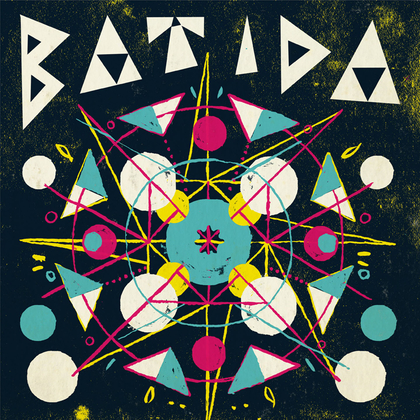
Soundway Launches New Collaborative Music Project with Batida Release

By Robert Fox
Since 2002, Soundway Records from the UK has set the standard for unearthing and re-releasing crucial recordings from the golden era of 70s-era West African big band music. As much as anyone in the world, they can take credit for bringing modern attention to this incredibly creative and compelling period of musical output.  In recent years, they have expanded their reach to include brilliant compilations of old-school funky roots music from Columbia, Panama, Belize, Thailand and more.  Their super-cool online radio show and podcast is essential listening.  Therefore it's exciting news that they are expanding their efforts to include the production of new music by artists inspired by Soundway's groovy, archival vision.  The opening shot will be on March 26th with the debut release by Batida, the brainchild of Angolan / Portuguese DJ Mpula aka Pedro Coquenão.  Here's more info from Soundway, along with a free download of the track "Tirei o Chapeu," as well as two accompanying videos: 
Soundway are proud to release the debut album of Portuguese/Angolan DJ Mpula aka Pedro Coquenão. A distinctly modern and vibrant project with its feet firmly rooted in the past, Batida combine samples from old 1970s Angolan tracks with modern electronic dance music. Simply put, Batida is the sound of the wildest Angolan street party.
Being the first of a string of brand new projects, this eponymous first album sees Soundway taking a slightly different direction in 2012 and beyond. Championed mostly for their work in un-earthing and re-releasing classic, rare and vintage tropical recordings, Soundway have started signing new acts that have drawn on and been inspired by the kind of music found on the label’s groundbreaking compilations and re-issues.
What originally started out as a radio show designed to promote new African music has slowly evolved into a collaborative project crossing continents. Music is the starting point but through dance, graphics, photography, radio and video, Batida expands, taking in politics and social commentary but always bringing it back to the party.
Batida’s high energy live show features dancers, percussionists, DJs, MCs alongside visuals and images (both archive and new) of Angolan streets, war and fragments of tribal life.
Batida will be making their first live performance of the year at this years Eurosonic festival in The Netherlands.


Thursday, March 01, 2012

Y’en A Marre and Rap Revolution in Senegal

Fadel Barro and Simon (right), Y’en A Marre founders,
at polling station to vote and monitor
By Michael Shereikis


No beating about the bush here, eh Abdoulaye? Revolution heading south...where y'at Bongo, Biya, et al? From 'kola (Bukola Jejeloye) of the The Afropop Blog, the official blog of Afropop Worldwide
On February 26th, the much anticipated elections in the West African country of Senegal took place. While official results are being waited upon, speculations are high that there will be a March run-off election between the incumbent 85-year-old president, Abdoulaye Wade and Macky Sall, his former prime minister and protege (they had a falling out due to Sall wanting accountability from Wade’s son, Karim, over some governmental expenditure). World famous Senegalese singer Youssou N'Dour attempted to get on the ballot but his candidacy was invalidated by the country’s Constitutional Court...
…The country found itself in the grips of protests and riots last summer that extended into recent weeks before the election where six or more people were killed.  Reportedly leading these protests, sans the riots, are M23, a composition of civil society groups, ordinary citizens and opposition parties that arose from an uprising on June 23, 2011 protesting against a constitutional makeover by President Wade, and Y’en A Marre (French slang for "fed up"), a group of citizens including youths and artistes fronting for the frustrations of society at large. ..
So who really are they? According to its website, Y’en A Marre is “a citizens' initiative started at the outset by committed Senegalese artists (rappers) and journalists.” It was indeed founded by a small group of rappers including Thiat (Cheikh Oumar Cyrille Touré) and Kilifeu (both of the famed hip-hop band "Keur Gui of Kaolack" (see our October coverage of them here), Fou Malade (Malal Talla), Djily “Baghdad” Aidara and Simon Bisbi Clan (Simon Mohamed Kouka)… Many on the streets of Dakar are not surprised that rappers would help found a new political movement in the country as they have the ears of the street through their music which their fans adore...
...Then there is the music, the revolutionary hip-hop music underpinning the movement. It is only natural that Y’en A Marre would tap into its internal resources to make its voice heard. It also helps that Y’en A Marre’s founders have street credibility as they have been rapping revolutionary songs before they formed the group. But just to highlight its message markedly, the group also released a compilation at the end of last year, self-titled “Y’en A Marre”. The single “Faux! Pas Forcé” from the compilation has become the group’s anthem in its protests and on the lips of many desiring change in Senegal. Rap has come to make its mark in the politics of Senegal and I doubt it will be leaving anytime soon no matter how annoying it might be in the side of the establishment. Fela Kuti would be smiling in his grave now ... “Music is [indeed] the weapon.”

Sunday, February 26, 2012

Fela Soul

By Robert Fox

Fun recent mashup of Fela and classic hip hop innovators De La Soul by producer Amerigo Gazaway of Gummy Soul, who describes the project as follows:
What do you get when you put together afrobeat legend Fela Kuti and rap pioneers De La Soul? You get Fela Soul, a musical tapestry created by Gummy Soul artist Amerigo Gazaway. More than just a clever title, Fela Soul is an 8-track, 33 minute journey into the world of afrobeat rhythms, funky horn riffs,  and classic hip-hop gems. Using dozens of  hand-picked samples from the Nigerian instrumentalist and political figure Fela Kuti, and 8 carefully-chosen acapellas from the Native Tongue rap trio De La Soul, Amerigo seamlessly intertwines the two into something completely new and original.
NPR singled it out as one of the best recordings of 2011 from the independnt music publishing site Bandcamp:
Fela Soul is the sort of mash-up album that never gets tired. The concept is fresh and simple: Take the music of Afrobeat legend Fela Kuti and marry it with the raps of De La Soul. Fela Soul is the work of Gummy Soul producer Amerigo Gazaway, who makes his ingredients sound as if they were born to be together. (There's also an instrumental version of the album that you can also download for free.) Nashville's Gummy Soul, a boutique soul and hip-hop label, was founded by Walter Clark and started as a radio show on Vanderbilt's WRVU.
All the tracks are available for legal streaming and downloading along with liner notes from the Gummy Soul Bandcamp site. Enjoy:


There's also a cool video to accompany the recordings:


Hat tip to Marc Gabriel Amigone of the always up-to-date Afrobeat Blog for the heads up.  

Saturday, February 25, 2012

Stevie Wonder: Signed, Sealed, Delivered

By Robert Fox

This is so funky that watching it nearly makes me pass out.  A very different twist on a classic tune, from a German television show in 1973.  It doesn't get much groovier than this. Gotta love Deniece Williams leading the backing vocals:

Monday, February 21, 2011

Best Fela Video: Live in Berlin 1978 DVD


by David McDavitt

Surfacing mysteriously after over 30 years, the video footage of Fela and African 70’s set at the Berlin Jazz Festival (Berliner Jazztage) in 1978 is a true gift to lovers of Fela and Afrobeat, marking the best quality video/audio and musical performance of Fela to date. Seek it on Youtube if you must, but true fans will want to obtain a DVD copy to witness this event in its full splendor uncompressed, large, and with full sonic spectrum (hook this puppy through your sound system). Plus you will see the songs unbroken, with Fela’s informative introductions:

DVD and double CD set:
Fela Kuti, Anthology vol.2 (2CD, plus DVD) , Wrasse 2010
**Import (Europe)- make sure your TV can play PAL


1978 was a year full of historically significant events in the turbulent life of Fela Anikulapo Kuti. Fela was not performing locally, the Nigerian government had banned Fela shows for a year, and neighboring Ghana kicked him out after protestors adopted Fela’s “Zombie” in anti-government protests.

February, in anti-colonial cultural protest, he married 27 wives (his “Queens”) in Lagos. He and his republic staged a 78-day sit-in protest in the Decca Record company Lagos headquarters for breach of contract and royalty disagreements (Fela’s show in Berlin is the only reason they left). In April, Fela’s mother died of injuries she sustained during a government raid on Fela’s Kalakuta compound.

In November (or September according to some sources), Fela & Afrika 70 headlined the Berlin Jazz Festival, while back home in Nigeria, government forces demolished the Kalakuta compound. Shortly thereafter, Afrika 70 disbanded, after Fela’s longtime musical director/drummer Tony Allen quit, reportedly due to pay, autonomy, and respect issues (for example, Fela decided to use the Berlin Jazz money to fund his presidential campaign). Fela’s baritone saxophonist, Lenkan Animashaun (a.k.a. Baba Ani) assumed the duties of musical director of Fela's new Egypt 80 band.

Berlin Jazz 1978 was a landmark concert for Fela: a rare, high-quality, professionally recorded document of Afrika 70’s final show! The venue is in the round, and although there are few camera angles, close-ups and smart democratic focus on most band members is satisfying (though Allen is not covered quite as much as his importance commands). Songs are true Afrobeat length (approximately 15 minutes each). Solos are as strong as ever, this is Afrika 70 at their apex.

Musically, the band is tight, vocals are solidly accurate, and the groove is a stunning demonstration of the highest level of musicianship, control, and stage presence. The band is animated, engaging, and amusing (guitarists Kologbo & Shegun, and the percussionist Abayomi brothers are particularly entertaining). Dynamics are extreme and hits are thrillingly precise. The polyrhythmic percussion propels with bubbling tension and release, and contains the sonic interest of woody melodic gbedu (akuba).
In light of the band's brilliance and infectious energy, it is puzzling and vexing that the live audience does not react much. They do not stand, nor dance, mostly sitting watching, stroking their beards, exclaiming, "hmmm, indeed." Odd.

The video and audio quality is the best I have ever seen for a Fela concert. The mix is remarkable for the era and enormity of the band. The video is crisp and well lit, with white stage lights always on. Not particularly mood-inducing, but perfect to witness Afrika 70's band members playing, who are too often buried in the murky darkness. The band is perfectly tailored in bright yellow, with the chorus members donning complimentary purple. Fela is stunning in a yellow/dark blue brocaded jumpsuit.

Tony Allen plays an uncharacteristically large single-headed Rogers drum set, with dark Evans Hydraulic drumheads.


Quincy Joppes sums it up in his introduction: "We present to you today, the greatest thing that ever came out of Africa... Fela and the Afrika 70... an experience of real African music...you will see something very original politically, religiously, and musically.”


He introduces the members of Afrika 70:

Afrika 70 Band Personnel, 1978:
Fela Kuti- Hammond Organ/ percussion/ vocals
Tony Allen- Musical Director/Drum set
Lenkan Animashaun (Baba Ani)- Baritone Sax
Christopher Uwaifor- Tenor Sax
Ogene Kologbo- Tenor Guitar
Shegun (Leke Benson?)- Rhythm Guitar
Oye Shobowale- 1st Trumpet
Tunde (Baba Tunde) Williams- Trumpet.
Franco Aboddy- Bass Guitar
Henry “Ojo” Kofi- 1st Conga (Gbede)
Shina Abiodun- 2nd Conga
Addo Nettey- 3rd Conga
Ayola Abayomi- Sticks/Claves
Isaac Abayomi- Shekere

Chorus (unintroduced, but may include):
Bernadette Oghomienor- Chorus
Tejumade Adebiyi- Chorus
Sade Shehindemi- Chorus
Regina Osundor- Chorus
Felicia Idonije- Chorus
Suru Eriomila- Chorus


The songs on the Fela live in Berlin (1978) DVD :


1. V.I.P (Vagabonds In Power)
Fela introduces V.I.P., “Look at me as something new, something you have never seen before...99.9% of the information you get about Africa in wrong...V.I.P.means ‘Very Important Personality’...but you see, when these VIP get too rich, they do not want to see the ordinary man on the street who is poor.” Fela chastises audience members for talking while he is introducing the song.

2. Power Show
Introduction- “I am going to stand for presidency of my country next year... Somebody ask me, ‘how can a musician be a president’, and I ask him how can a lawyer be a politician?... The big man, like to use power to strike you down... the African concept of music, where jazz originated...” This performance is quite a rollicking rock version.

3. Pansa Pansa
Introduction- “You see when you are a revolutionary and you talk the truth... people will come and slap you down... then you talk again, they put you in jail... and when you are very strong, and you talk again, they may kill you, they may even burn your house down.... African people are afraid for life... they say, ‘do not talk again’.... but they no hear at all, they going to hear Pansa Pansa (more and more...) because the truth can never die”. Pansa Pansa is a wicked fast Afrobeat groove. The bass guitar is a little low in the mix here- crank your bass settings for maximum funk. Watch for the percussionist helping the guitarist adjust his settings mid song! Pansa Pansa recounts some of Fela’s revolutionary hits, then directs some audience participation. Look for Fela’s organ solo surrounded by his percussionists and guitarists striking photogenic poses around him.

4. Cross Examination of the African Colonial Soldier
Cross Examination imagines putting the "African colonial soldier" on trial (Nkruma as judge, Fela as prosecutor, JK Braimah as defense).

**Cross Examination contains extended masterful solo work by drummer Tony Allen- leading Fela’s wives/ dancers in provocative displays!

If you purchase the DVD, you get the bonus of 2 CD’s or Fela’s best:


CD Track list


CD1
1. Expensive Shit
2. He Miss Road
3. Everything Scatter
4. Ikoyi Blindness
5. Kalakuta Show
6. Na Poi (1975 Version)

CD2
1. Colonial Mentality
2. Zombie
3. Unknown Soldier
4. Coffin For Head Of State (Part 2)
5. Africa Centre Of The World

Get it!


Check out The Shrine's breakdown of Fela's DVD releases! (news, bios, shows...)
Friday, December 04, 2009

New release by Ali Farka Toure and Toumani Diabate

By Robert Fox

World Circuit Records has announced the release of a posthumous recording by guitar legend Ali Farka Toure, teaming up with kora master Toumani Diabate. Titled "Ali and Toumani," it's due out in February 2010.

The CD will be a follow up to their first collaboration, the 2005 Grammy Award-winning "In the Heart of the Moon." Issued just before Farka Toure's passing in 2006, it was celebrated for its deep, relaxing grooves, superb musicianship and cross-cultural vibe. Mojo magazine called it "the most beautiful music on Earth."

The Guardian on the first album:
The guitarist is from the north of Mali, one of the breakthrough world music artists of the 1980s and 1990s, whose "African blues" alerted a generation of guitar-loving rock fans to the treasures that lay outside the Anglo-American faultlines of rock'n'roll. And Diabaté is from the south - a Mandé griot schooled in a tradition that can be traced back to the 13th century.
...
We're used to world music hybrids between east and west; between electric and acoustic; and between the head and the heart. One of the distinctions of this album is that it is a hybrid of two Malian traditions that rarely meet. Though Diabaté and Touré have known and admired each other for many years, they have hardly ever played together. This gives their collaboration a special quality: it is simple yet richly detailed, spontaneous yet courteous.
Any new material from Ali Farka Toure is to be treasured, especially if it includes a collaboration with "Jimi Hendrix of the kora."

The sessions also feature Cuban bass genius Orlando "Cachaito" Lopez, who died earlier this year. Cachaito is famous around the world for his stellar performances on the Buena Vista Social Club recordings. But he also boasts decades of incredibly tasteful playing on his own solo recordings as well as on countless other seminal tracks with groups such as Orquesta Riverside and Irakere.

World Circuit has pre-released one of the tracks from the upcoming CD, "Kala Djoula," which you can listen to or purchase here. And check out this very cool video of the artists performing the song:


There's also a nice short film on the making the recording. Priceless footage: enjoy!


Wednesday, November 25, 2009

Louis Armstrong: “Nothin’ happen I ain’t never seen before.”


By Robert Fox

On television once, I saw some amazing interviews where people describe seeing Louis Armstrong's band in the 1920s. Early in Armstrong's career, the band traveled by paddle boat up the Mississippi River from New Orleans, stopping in every town along the way to play in the boat's ballroom.

In the interviews, various witnesses recall the overwhelming power, volume and rhythmic sophistication of those concerts on the paddle boat. It was before instruments were amplified, before radio and records were widespread, before modern jazz had ever been heard before. The big band was the Marshall stack of the era.

Given how fluid music is across borders these days, it's hard to imagine the searing impact Armstrong's band must have had at the time, especially in rural America. Some of the people interviewed described it as a life-altering experience that changed them forever, and made them want to become musicians from that moment forward.

Yesterday, there was a great article about Louis Armstrong by Michiko Kakutani in The New York Times. The piece is a review of a new biography by Terry Teachout, titled "Pops: A Life of Louis Armstrong." The review sums up nicely the musical tidal wave he created, a wave that still laps up on shores everywhere:
Louis Armstrong, a k a Satchmo, a k a Pops, was to music what Picasso was to painting, what Joyce was to fiction: an innovator who changed the face of his art form, a fecund and endlessly inventive pioneer whose discovery of his own voice helped remake 20th-century culture.
...
Mr. Teachout reminds us of Armstrong’s gifts: “the combination of hurtling momentum and expansive lyricism that propelled his playing and singing alike,” his revolutionary sense of rhythm, his “dazzling virtuosity and sensational brilliance of tone,” in another trumpeter’s words, which left listeners feeling as though they’d been staring into the sun.
...
“Even before his face became known to the readers of newspapers and illustrated magazines — and, later, to filmgoers and TV viewers,” Mr. Teachout writes, “Armstrong was the first jazz musician whose voice was heard by large numbers of people. In this way he emerged from behind the anonymity of the recording process and impressed his personality on all who heard him, even those who found most instrumental jazz to be unapproachably abstract. It was the secret of his appeal, and he knew it.
...
Although Armstrong’s life story has been told many times before, Mr. Teachout does a nimble job of reconjuring the trajectory of Armstrong’s experience, which coincided with — or was in the vanguard of — so many formative events in 20th-century Afro-American history, from the Great Migration that brought many Southern blacks North to cities like Chicago to the Harlem Renaissance of the 1920s and ’30s. He recounts the travails of touring that Armstrong experienced in a still segregated South, to his acclamation in Europe in the ’30s and ’40s and the mainstream American success he finally achieved in the ’50s.

The reader gets a dramatic snapshot in this volume of Armstrong’s life on the mean streets of New Orleans, where he grew up, the illegitimate son of a 15-year-old country girl, among gamblers, church people, prostitutes and hustlers; his adventures in gangland Chicago and Jazz Age New York; the rapid metamorphosis of this shy, “little frog-mouthed boy who played the cornet” into the most influential soloist in jazz; and the long, hard years on the road, crisscrossing the United States dozens of time, playing so many one-nighters that he often came off the stage, in his own words, “too tired to raise an eyelash.”

As Mr. Teachout astutely points out, Armstrong’s trumpet playing, like his singing and copious writings (including two published memoirs and countless letters, which he pecked out on a typewriter he brought with him on the road), was the means for Armstrong to reflect on all that he had witnessed. “I seen everythin’ from a child comin’ up,” he said once. “Nothin’ happen I ain’t never seen before.”

Boppers and avatars of the cool, in turn, rejected Armstrong’s desire to entertain the audience — to mug and clown on stage. And yet even Miles Davis, who in rejecting Satchmo’s crowd-pleasing ways went so far as to turn his back on the audience, acknowledged that the history of jazz radiated out from Louis Armstrong: “You can’t play nothing on trumpet,” Davis said, “that doesn’t come from him.”
In a companion piece also in the Times, music critic Ben Ratliff breaks down an astounding 1933 video clip of Armstrong playing "Dinah" in Denmark:


Ratliff:
This is a short and efficient answer for why he was and is important. You sense he’s building his brand — the stuff with the handkerchief, getting up in the viewer’s grill, popping his eyes at .55 — but it’s still pretty extreme, and exciting. Look at how he felt music, and moved to it. (Especially .10-.20, that davening kind of thing: James Brown did that too.) Listen to the way he chopped up rhythm, sailing his phrases over the beat. You want to say he’s imitating a trumpet when he sings, but then you want to say vice versa, so neither can be true. He’s continuous, playing or singing something nearly all the way through, making his body part of the performance. Also, watch the band’s feet.

Monday, November 23, 2009

Dubwise: U-Roy The Originator

By Robert Fox

U-Roy has been a major presence in my sonic landscape over the last few months. The godfather of toasting and hip-hop pioneer, he created some of the most memorable tracks in the history of reggae. Collaborating with an incredible list of musicians over the years, U-Roy virtually invented a whole new genre of music. It's still as fresh today as ever. Once these songs get into your head, they never come out. 

Background from All Music Guide:
"Known as the Originator, U-Roy wasn't the first DJ, nor even the first to cut a record, but he was the first to shake the nation and he originated a style so distinctly unique that he single-handedly changed his homeland's music scene forever...His toasts were utterly relaxed and conversational, yet always in perfect synchronicity with the rhythms."
And from Trouser Press:
"Just as dub reggae anticipated funk and rock remixes, toasters — chanting reggae DJs — prefigured rap. U-Roy (Ewart Beckford) was one of Jamaica's first DJs to graduate from sound systems to chart success in the late '60s. (Indeed, for several weeks early in 1970, he had three records — "Wear You to the Ball," "Wake the Town" and "Rule the Nation" — atop the charts on Jamaica's two radio stations.) His signature style is plain and direct: he shrieks and chants over the instrumental tracks of other hits, interrupting and talking back to the vocals. When he first appeared, such musical antics were unprecedented on record, and he became an immediate sensation. While it can't be said that U-Roy invented toasting, he's considered the style's godfather, and an inarguable reggae pioneer."
Behold this priceless footage of U-Roy toasting "Versions Galore," which was originally recorded for the 1973 Trojan release of the same name, produced by Duke Reid ("Versions galore, you can hear them by the score, I could give you some more for sure..."). Amazing--this is what the invention of rap looks like!:


And how about this gem from the Heartland Reggae documentary--U-Roy at the peak of his powers (and dig the threads!):


Saturday, November 21, 2009

"Fondo" by Vieux Farka Toure

By Robert Fox

I've spent much of the last few months listening to Vieux Farka Toure's 2009 album Fondo nearly every day. It's one of my favorite recordings in years, featuring an innovative mix of traditional Malian rhythms, an up-to-date sound, great supporting musicians, and (of course) blistering, very special guitar playing. I really like this recording.

Vieux makes waves now wherever he goes, as Marc Bruner noted recently here. Vieux came through Washington, DC not long ago for an impressive evening with Elikeh, the roots afropop group, and heads were spinning.

I had listened to Vieux's first solo album and was impressed, but the new CD breaks ground with its synthesis of different sounds. And did I mention the blistering guitar? Wow.

I'm not the only one taking notice--the CD has received great reviews around the world: "firmly establishes young Toure as a bona fide African guitar hero" (Banning Eyre, NPR); "his finest work to date" (The BBC); "dazzling" (The Guardian); "glistening, reverb-drenched tone recalls Eric Clapton's in the original 'Layla' " (The Boston Phoenix).


And our friends at Modiba Productions have a pretty amazing video of Vieux casually playing acoustic guitar--can he make it look any easier?


Monday, July 14, 2008

Afrobeat in Amsterdam- Zuluwannsago

By Kenny Eaton


Allow me to introduce Zuluwannsago- an afrofunk band based in Amsterdam, the Netherlands. The 10-member group’s funky grooves and African infusions are infecting audiences and rousing dance floors. Zuluwannsago’s diverse collection of musicians shows through in their music- lots of flavors, tons of power. Bandleader Yusuf Nuweku originally comes from Ghana. From childhood on he played the traditional percussion rhythms of his country and as he moved to the Netherlands he began to develop himself further as a bandleader.

The rest of the international Zuluwannsago lineup consists of members from the Ivory Coast, Portugal, the Netherlands and the Caribbean. Check out this sweet snippet of them performing at a Jazz Festival in Holland:


Tuesday, July 01, 2008

Wijdan, The Mystery of Gnawa Trance Music

By Kenny Eaton

The Gnawa people hold a unique place in the realm of Africa. Their music possesses medical, spiritual, and transcendent value in their native country of Morroco and has begun to spread to the West. Groups like Gnawa Diffusion have taken this enthralling culture to the masses, inspiring trance and musical possession in previously austere audiences in Europe and North America.

I recently checked out a film documentary called “Wijdan, the Mystery of Gnawa Trance Music” that follows the music and people that make up this incredible culture.

Here is a description from the film’s Myspace:
This film is an intimate portrait of two men who found each other like lost brothers separated by time. Time we now call history. Sibiri, bambarra musician of Mali, and Brahim, gnawa musician from Morroco. This 52 minute documentary is witness to these masters of the supernatural as they transmit secret knowledge to their children. As a testament to a fast changing Africa, we rediscover the meaning of transmission because who knows the color of the chick before it hatches?
I was intrigued by Wijdan. Already being an avid fan of Gnawan music (check out my blog post on Gnawa Diffusion), I was pumped to come across such a professional documentary of this music. The film delves into the leela possession-trance ceremony of the Gnawa and follows the stories of the musicians that stand at the heart of it. For those interested in Gnawan music, this film is extremely informative- explaining the healing process of the leela from the ground up and providing a personal look at the lives of Gnawan performers.

Check out this documentary! It is available in DVD format, so it’s very user-friendly and accessible to the masses. You can check out a preview of the documentary on Youtube:


Saturday, June 14, 2008

Classic Judy Mowatt Footage

By Robert Fox

Wow--check out this casually brilliant performance by Judy Mowatt, back in the day. One of Jamaica's greatest vocalists as well as a critical element in Bob Marley's vocal backing group the I-Threes, she is known for her perfect voice and huge stage presence. This is one of my favorite tunes of hers, and the video setting is illustrative of the community and working class roots of reggae. Word:

Friday, May 23, 2008

Keeping It In The Family

By Kenneth Eaton

Fela Kuti is praised the world over as the father of Afrobeat. His virtuosic approach to songwriting and legendary stage presence still provide inspiration to countless musicians and bandleaders. Fela’s two sons, Femi and Seun, are continuing in their father’s footsteps and blazing new trails in Afrobeat. Last month, Seun launched a world tour and released his first CD--you're definitely going to want to hear it. Be sure to check out this excellent new article in this month’s issue of The Walrus about Fela and his sons. Here's a clip about Fela from the article:

When twenty-five-year-old Seun Kuti of Nigeria took the stage for a showcase concert in Seville, Spain, last October, it was as if a ghost had entered the hall. Seun was fronting his late father’s band, Egypt 80, orchestra sized and iconic in the minds of some 2,000 world music professionals gathered for the annual womex trade fair. This was Fela Kuti’s legendary Afrobeat sound as few have heard it since the patriarch died of aids in 1997. The Egypt 80 brass section sounded dense and primal, blaring out passages from Fela’s epic composition “Colonial Mentality” over thick layers of interlocked guitars and keyboards, muscular bass, bubbling percussion, and — an Afrobeat signature — high hat sizzling like bacon in a pan. At centre stage, young fearlessly appropriated his father’s trademarks: the tight pants, the bare chest, the occasional dalliance with a saxophone, the rough, taunting, half-rapped vocals that morphed from playfulness to outrage, and the quirky stage moves — in Seun’s case, wildly elastic, almost contortionist. We could have been peering through a time tunnel at the young Fela himself.

Of course, when Fela Kuti was in his twenties he was an unknown. In 1963, he had been studying at the Trinity College of Music in London, and was returning to a hopeful, newly independent Nigeria with his head full of soul music, jazz, and “highlife” — West African boogie. Fela’s early attempts to fuse these genres were innovative but not especially well received in Lagos, where audiences preferred their highlife free of jazz complexity. It was only some seven years later, when, after processing black power, free jazz, and James Brown, Fela created Africa 70 and the funky, irreverent sound we now know as Afrobeat emerged. By the mid-’70s, he was pioneering a new art form with his bold, often profane assaults on Nigeria’s
political class, which he portrayed as thieving and squandering billions in oil and other revenues while doing little to improve the lives of ordinary people. Fela’s songs lasted twenty minutes or more, with the maestro conducting his enormous brass section, pounding on a Fender Rhodes keyboard, blowing on his tenor sax, and, when he was good and ready, barking out pidgin English screeds the likes of which had never before crossed the lips of an educated Yoruba man. Songs like “Why Black Man Dey Suffer,” “Expensive Shit,” “No Bread,” “Up Side Down,” and especially “Zombie,” Fela’s lacerating parody of Nigerian soldiers, had no precedent in African music. Musicians were there to praise, to uplift, and entertain. This one seemed hell bent on destruction.
You can hear tracks from the new CD on the My Space page for Seun Kuti and Egypt 80.

A particularly exciting performance in the works is on July 6th in NYC’s Central Park for the Summerstage concert series--Seun Kuti will be playing with Afrika Bambaata (who has been credited more than anyone else as a driving force in the emergence of hip-hop), plus reggae hero U-Roy. Seeing these legends of music in one night will definitely be a memorable experience. For those in the Washington, DC area, Seun Kuti and Egypt 80 will be playing at The 9:30 Club on July 7th.

Banning Eyre has a great interview with Seun from 2007 on Afropop Worldwide. And--I hope you have room to dance near your computer--check out this spellbinding video of Seun Kuti and Egypt 80 while in Dakar in 2005, featuring the immortal Tony Allen on drums and Manu Dibango on sax. Wow!

Sunday, March 02, 2008

The Tightest Band In History?

By Robert Fox

Very possibly.

Check this out: James Brown live in Paris, 1971, "Ain't It Funky Now." Featuring Phelps "Catfish" Collins on lead guitar, Bootsy Collins on bass, Fred Wesley on trombone, Maceo Parker on sax. This was recorded shortly before most of the band left to help form Funkadelic, when JB became just too much to bear.

Incredible focus and musical unity. This is the Rosetta Stone of Afrobeat, and you can see the source of many of the elements of Fela's stage show here. Never can say enough about James Brown, modern super-hero and freak:


Monday, October 15, 2007

What Would Fela Do?

By Robert Fox

Today is Fela's birthday, and he would have been 69 years old. What would he be singing about now?

No doubt he would include many of the same themes that he addressed during his lifetime: the ongoing exploitation of Africa in general and Nigeria in particular by the wealthy and powerful, from London to Lagos, Washington to Kinshasha; the sorrowful indifference of the governments in industrialized nations to the poverty, inequality and suffering their development models bring to much of the world; the madness of the war in Iraq; the unending massacres in Darfur and Congo.

I think Fela would certainly still be addressing the agonizing persistence of torture and inhumanity in prisons around the world, as a victim of military brutality himself. And I hope he would have eventually turned his immense charisma and musical power toward addressing AIDS prevention and education.

What kind of music would Fela be playing now? That's an interesting question. Given the changing trajectory of his music over the years, from jazz to highlife to funk to Afrobeat, I think it's safe to expect that he would have taken his music in new directions. The resurgence of Fela's popularity in recent years would presumably have given him a broader worldwide platform than ever.

Perhaps he would have moved to include hip-hop in his music, maybe adding a wider variety of collaborations, something along the lines of the Red Hot and Riot project? Maybe a step towards tighter grooves and melodies, e.g. Tony Allen's "Home Cooking?" Experimenting with remixes along the lines of Manu Chao or my new favorites from the neighborhood, the Fort Knox Five? Maybe Fela would have gone back to his roots in hard bop jazz and headed in the direction of current jazz-funk heros like Christian McBride or Galactic? Possibly he would have come to work more Latin influences into his music, like so many other West African musicians of his generation--think Ozomatli, Yerba Buena or Grupo Fantasma?

However, it's rare that popular music artists substantially change stylistic direction once they reach a certain age. It seems like many find a form that works for them artistically, musically and/or financially and they stick with it, although exceptions do stand out, such as John Coltrane, Miles Davis, John Zorn or Lou Reed, not to mention a more recent favorite of mine, P.J. Harvey.

But maybe Fela would have gone back to the old-school Afrobeat that he invented and no one has ever topped? So for Fela's birthday, check out the Birth of Afrobeat from this priceless live footage of Fela and Africa 70, from Ginger Baker's 1971 Africa documentary--any doubt who is in charge of this band?:


Friday, March 23, 2007

Orchestra Baobab In The Groove

By Robert Fox

Senegal’s Orchestra Baobab is riding an ever-growing wave of recognition, following their re-forming of the band several years ago. Recent months have witnessed the publication of a number of new compilations of previously hard-to-find material from their epic 1970s run of super-herodom. I’ve been enjoying listening to the newly available recordings on the Rhapsody music subscription service and on Calabash Music, but they are widely available as well from other online and commercial sources.

My favorite of the recent releases is “Bamba,” which includes ten previously rare 1970s tracks (click link to listen to samples or purchase). Also refreshing is “Classic Tracks,” which features alternate versions of OB gems such as “On Verra Ca,” “Sibam” and “Tante Marie.” “A Night at Club Baobab,” available for download from Calabash, highlights the intensely funky tune “Kelen ati Leen,”---showing that the band can get down with the best of them when it comes to Afrobeat. Barthelemy Attisso, Issa Cissoko and the guys can do anything!

There are also an increasing number of strong performance videos of the band on You Tube and other video sources—no doubt a reflection of OB’s series of world tours over the last couple of years, which built on the success of their Nonesuch hit CD “Specialists in All Styles,” and the re-release of the classic “Pirates Choice” recordings.

For example, check out this video gem of “On Verra Ca” recorded during a recent world tour:

You can read other posts about Orchestra Baobab on the AfroFunk Forum here and here.

Sunday, November 12, 2006

The Ohio Players Kick Your Ass

By Robert Fox

Oh Wow!--check out this priceless clip of The Ohio Players doing "Fire" for live television in Germany, circa 1974. Are these guys supermen or what? Unbelievable musicianship and style, hailing from Dayton, Ohio, USA. The German studio TV crowd doesn't seem to know what to think! Note that the fire engine light effect stops after the intro--just keep watching for an unparalleled heavy-duty groove:


Tuesday, November 07, 2006

Chase Those Crazy Baldheads Out Of Town!

By Robert Fox

Well, it’s finally Election Day here in the United States. Today many of us are hoping to strike a blow against idiocy, corruption, incompetence and illegal brutality by voting out of office the clowns in Washington who have enabled George Bush’s Reign of Error for the last six years.

The Afrofunk Forum has attracted readers in 53 different countries since we started the site---to everyone outside the US: please take my word for it that lots of us are doing our best to put an end to our (and your) governance nightmare.

For an Election Day Special, check out Bob Marley in this classic video footage--let’s chase those crazy baldheads out of town!

Crazy Baldheads
I and I build our cabin
I and I plant the corn
Didn’t my people before me
Slave for this country?
Now you look me with such scorn
Then you eat up all my corn
We’re gonna chase those crazy baldheads out of town…

Build your penitentiaries
We build your schools
Brainwash education
To make us the fools
Hatred you reward us for our love
Telling us of your God above
We’re gonna chase those crazy baldheads out of town…

Here comes the con man
Coming with his conflam
We won’t take no bribe
We’ve got to stay alive
We’re gonna chase those crazy baldheads out of town…

Monday, October 16, 2006

Lee Perry Gives Birth To Reggae

By Robert Fox

How was reggae born? Check out this video clip of Lee Perry's Black Ark Studios while the master records The Heptones for an illustration of how it's done (early 1970s?).